
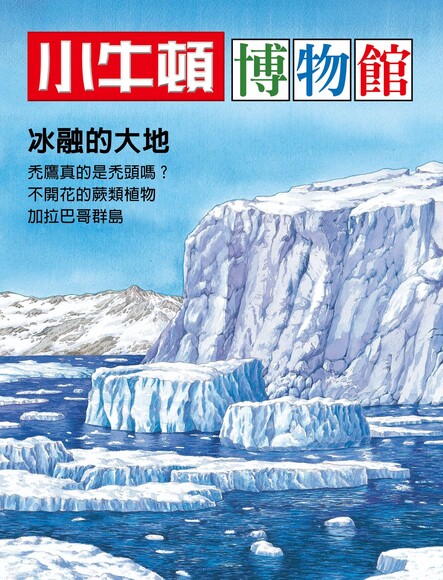
Children hear about ‘melting glaciers’ and ‘rising sea levels’ constantly in the media, but few understand the actual physical mechanics behind cryosphere science. 《小牛頓博物館:冰融的大地》 gives young readers the foundational earth science needed to comprehend global climate dynamics with scientific clarity.

| Chinese Title | 《小牛頓博物館:冰融的大地》 |
| English Title | Newton Science: The Melting Earth & Our Fragile Poles |
| Author / Creator | 小牛頓科學教育團隊 |
| Publisher | 小牛頓科學教育 |
| Content Age Group | Ages 7–11 (Content Maturity) |
| Motherly Notes Level | Middle Level |
| Word Count / Format | Approx. 4,500 words across 58 illustrated pages; includes glacier movement diagrams and polar food chains. |
| Readmoo Rating | ⭐⭐⭐⭐⭐ 5.0 Stars |
🎯 Motherly Notes Reading Level Framework: Why We Separate Age from Chinese Level
At Motherly Notes School, one of our most important rules is: Never judge a child’s Chinese reading level by their chronological age. A 9-year-old might be cognitively ready for complex mystery plots, but if their Chinese literacy is at a beginner level, handing them a 30,000-word novel will crush their confidence. Conversely, an advanced 6-year-old might read chapter books with ease!
This Book’s Level: Middle Level
Polar geography, ice sheet physics, and climate science with full Zhuyin (~800–1,200 characters).
Click to see Motherly Notes 5-Tier Level Reference Guide ▾
- Convo Level: No Chinese reading yet. Early oral bilingual learners (bilingual read-alouds).
- Beginner Level: Knows Zhuyin/Pinyin phonetics; reads standard simple picture books (~200–500 sight words).
- Lower Level: Knows ~500+ characters by sight + solid Zhuyin/Pinyin decoding. Equivalent to 1st–2nd grade in Asia (native ages up to 8–9).
- Middle Level: Knows ~1,000+ characters without phonetic help; reads sustained chapter books (native ages 8–11).
- Upper Level: Knows ~2,000+ characters; reads novels without phonetic help (native ages 10–18 / AP Chinese).
📖 What the Book Is Actually About
From Greenland’s ice sheet to Antarctica’s subglacial lakes, this volume explains how snow compresses into blue glacial ice, how icebergs calve into the ocean, and how drilling Antarctic ice cores lets scientists examine atmosphere samples trapped 800,000 years ago.
💡 Why It’s Great for Bilingual Kids (Pedagogical Wins)
1. Cryosphere Earth Science Literacy: Teaches terms like 冰川 (glacier), 永凍土 (permafrost), 冰棚 (ice shelf), and 反照率 (albedo effect).
2. Scientific Method Demonstration: Shows how researchers actually gather climate data in freezing polar outposts.
3. Clear Zhuyin Annotations: Equips students with the vocabulary to discuss environmental science fluently in Chinese.
⚠️ Caveats
• Not a light cartoon: Highly informative and fact-dense. Best read in 2 to 3 page increments.
• Geographical terminology: References latitude, polar circles, and oceanic conveyor belts.
🚀 How to Access This Book
For overseas families, getting physical Chinese books shipped can take weeks and cost a small fortune in freight. \nReading on Readmoo gives you instant, legitimate digital access—plus crystal-clear typography on your iPad, computer, or mooInk e-reader.

