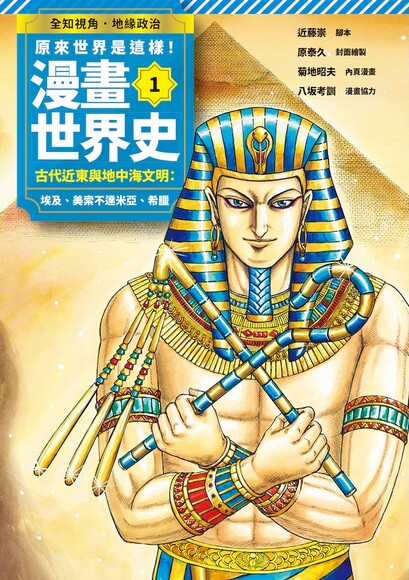
One of the biggest traps bilingual parents fall into is assuming that ‘comic book = beginner book.’ In Chinese, educational history manga is actually a serious linguistic step-up. 《漫畫世界史1:古代近東與地中海》 proves that you can give older kids sophisticated global history while keeping them hooked through visual storytelling.

| Chinese Title | 《漫畫世界史1:古代近東與地中海》 |
| English Title | Ancient Near East & the Mediterranean in Comics |
| Author / Creator | 親子天下編輯部 |
| Publisher | 親子天下 |
| Content Age Group | Ages 8–12 (Content Maturity) |
| Motherly Notes Level | Middle to Upper Level |
| Word Count / Format | Approx. 15,000+ words across 160 comic pages; rich dialogue bubbles, timelines, and maps. |
| Readmoo Rating | ⭐⭐⭐⭐⭐ 5.0 Stars |
🎯 Motherly Notes Reading Level Framework: Why We Separate Age from Chinese Level
At Motherly Notes School, one of our most important rules is: Never judge a child’s Chinese reading level by their chronological age. A 9-year-old might be cognitively ready for complex mystery plots, but if their Chinese literacy is at a beginner level, handing them a 30,000-word novel will crush their confidence. Conversely, an advanced 6-year-old might read chapter books with ease!
This Book’s Level: Middle to Upper Level
Don’t let the comic format fool you! Dense historical transliterated proper nouns and political concepts require ~1,000–1,500+ characters.
Click to see Motherly Notes 5-Tier Level Reference Guide ▾
- Convo Level: No Chinese reading yet. Early oral bilingual learners (bilingual read-alouds).
- Beginner Level: Knows Zhuyin/Pinyin phonetics; reads standard simple picture books (~200–500 sight words).
- Lower Level: Knows ~500+ characters by sight + solid Zhuyin/Pinyin decoding. Equivalent to 1st–2nd grade in Asia (native ages up to 8–9).
- Middle Level: Knows ~1,000+ characters without phonetic help; reads sustained chapter books (native ages 8–11).
- Upper Level: Knows ~2,000+ characters; reads novels without phonetic help (native ages 10–18 / AP Chinese).
📖 What the Book Is Actually About
Volume 1 traces human civilization from the river valleys of the Tigris and Euphrates, through the Code of Hammurabi, ancient Egyptian dynastic intrigue, and the philosophical city-states of Athens and Sparta. Characters speak in lively dialogue with clear infographic breakdowns summarizing treaties and timelines.
💡 Why It’s Great for Bilingual Kids (Pedagogical Wins)
1. No ‘Babyish’ Vibe: Older elementary kids (ages 9–12) who refuse to read illustrated picture books will proudly read this. It feels mature, epic, and cool.
2. Global Perspective in Chinese: Helps bilingual kids build Chinese vocabulary for world geography, ancient empires, and global governance beyond Asian history.
3. Dynamic Visual Pacing: Action sequences keep long historical explanations from feeling like a school textbook.
⚠️ Caveats
• Not suitable for Chinese beginners: The sheer number of multi-syllable transliterated proper nouns (Pharaohs, Mesopotamian city names) without phonetic crutches will frustrate early learners.
• Small comic font size: Speech bubbles use relatively compact typography compared to picture books, so reading on a larger tablet or mooInk device is recommended.
🚀 How to Access This Book
For overseas families, getting physical Chinese books shipped can take weeks and cost a small fortune in freight. \nReading on Readmoo gives you instant, legitimate digital access—plus crystal-clear typography on your iPad, computer, or mooInk e-reader.

