
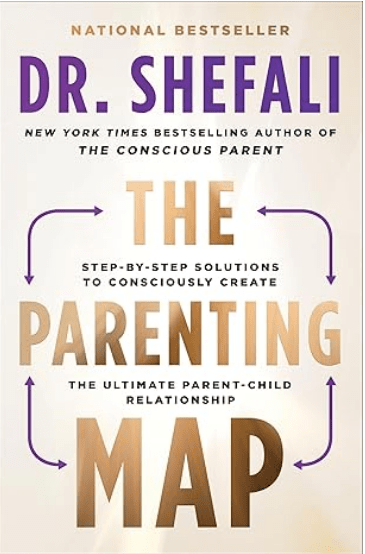
The Parenting Map by Dr. Shefali

Review: Dr. Shefali’s The Parenting Map is like having a wise, non-judgmental friend walk you through the ups and downs of parenting. In the first part, she gently nudges us to reflect on our own childhoods and how those experiences shape how we parent today. It’s a wake-up call to let go of all the “shoulds” society places on us as parents and instead focus on truly seeing our kids for who they are. The exercises in this section are simple but so powerful they help you notice patterns you might not even realize you’ve inherited. As being labeled a “tiger parent” it’s good to acknowledge a part of ourselves we’ve ignored. Our Facebook Group: Motherly Notes have gathered over 7,000 of the same types of moms and from my online school, classes, parent chats and interviews. This is our semi gentle wake up call!
Dr. Shefali lays out clear steps to handle the everyday challenges of parenting, from managing tantrums to setting boundaries, without losing your mind or your connection with your child. She doesn’t just tell you what to do. She shows you how to do it in a way that feels realistic and achievable. It’s like she understands what real-life parenting is like (messy and unpredictable) and gives you tools that actually work. I especially loved her advice on turning power struggles into opportunities for collaboration. It’s the kind of thing that makes you think, “Why didn’t I try this sooner?”
Later, Dr. Shefali reminds us that parenting isn’t about perfection, it’s about growth, both for us and our kids. She paints a picture of what it looks like to have a truly transformative relationship with your child, one that’s built on respect, empathy, and joy. It’s not just about raising great kids; it’s about becoming better people ourselves. By the end, you feel inspired and hopeful, like you can tackle anything that comes your way.
What I love most about this book is how compassionate it is. Dr. Shefali has a way of making you feel seen as a parent, flaws and all, without ever making you feel judged. She gives you the tools to be the best parent you can be while also reminding you that it’s okay to stumble along the way. Having said this, I also wanted to add that this form of parenting is also most beneficial for parents with teens. When the child hits the stage where social image matters and friends provide influence, the methods of this book will ring louder.
 Motherly Notes Methods - Nurture Love Educate